Korean color analysis: how personal color works in Seoul
Korean personal color names a season and then a tone, as in Spring Light or Autumn Mute. It grew from Western and Japanese systems, and a session in Seoul costs about ₩100,000 to ₩180,000. Its types don't line up neatly with the 12 Western seasons, and we'll show where they do and don't.
What makes it different?
If you’ve seen a Seoul session on social media, you’ll have noticed the differences right away. The result has two parts, a season and a tone. Consultants often work through a very large set of drapes. And some studios add an instrument reading. Otherwise, the core is the same as anywhere: a person, a mirror, and colored fabric under your chin.
The system also has a different starting point. Korean papers trace it to Carole Jackson’s four seasons, and then to two things that came after her. Kim, Oh and Lee describe the classification now common in Korea as resting on Fujii and von Alten’s 1992 system for Asian clients and on PCCS, the Practical Color Coordinate System that the Japan Color Research Institute published in 1964. PCCS treats color as hue plus tone, with twelve named tones such as light, bright, dull and deep. That’s where the second word in a Korean result comes from.
The stated reason for a different system is also interesting. Those authors argue that eye and hair color vary little among many of the clients, and that dyeing is common, so reading hair and eyes tells you less. That puts more weight on skin. It runs against a 2023 Western experiment, in which iris color mostly drove people’s clothing choices for the faces shown. Neither should be stretched beyond the people it studied.
What do terms like Spring Light mean?
The version most often described has eight types: two per season. Warm seasons are Spring and Autumn, with a yellow base. Cool seasons are Summer and Winter, with a blue base. The tone tells you which part of the color range suits you. Below are the eight as Kim and colleagues define them, next to the nearest of our twelve seasons.
Nearest: Light Spring. A close match in spirit.
Nearest: Bright Spring and Warm Spring. Studios may include what we'd call Warm Spring here.
Nearest: Light Summer. A close match in spirit.
Nearest: Soft Summer and Cool Summer. Takes in much of what we split into two seasons.
Nearest: Soft Autumn. Close, and may reach into True Autumn.
Nearest: Deep Autumn and True Autumn. Takes in much of what we split into two seasons.
Nearest: Deep Winter. Close, though Winter here is judged on a narrower range of coloring.
Nearest: Bright Winter and Cool Winter. Takes in much of what we split into two seasons.
Eight isn’t universal. One Yongsan studio’s listing describes 12 tone types across 4 seasons, with names such as Summer Pale. A Hongdae studio teaches an “8-season theory” and analyzes five elements: hue, lightness, strength, contrast and clarity. Seoul Window notes that many analysts judge warm or cool first, while one group works on lightness and strength first and hue later. A 2021 paper proposes 20 types. So ask which system a studio uses, and keep its name with your result.
How does it differ from the 12 Western seasons?
- Fewer categories in the common version. The eight have no equivalent of a True season, where temperature is the strongest trait. What we call Cool Summer and Soft Summer may both land in Summer Mute.
- Tone rather than dominant trait. Twelve-season systems ask which trait is strongest. Korean types use a named part of the tone map: Light is light and gentle, Mute is greyed, Deep is dark and Bright is vivid. Those overlap with Light, Soft, Deep and Bright, but they aren’t defined the same way.
- Different anchor. In Kim’s model, the center of the coordinate system is fixed from the distribution among Korean women in their 20s and 30s, whose skin colors the authors describe as very narrow in range. So a “cool” result means cooler than that group’s typical color, on that model. It doesn’t transfer directly to anyone else.
How to map your result honestly
If a studio gave you a Korean result and you want to use tools built on 12 seasons:
- Keep your season family as your first guess. It’s the most stable part of the result.
- Translate the tone by meaning: Light to Light, Mute to Soft, Deep to Deep, Bright to Bright.
- Look at the actual swatches or result sheet you were given, then compare them with the palettes. If yours look nearer a neighbor, believe your eyes.
- Hold both on your face. Real fabric under your chin in daylight is the best test, and the scan reads your own face if you have none to hand.
Don’t assume that your second-best carries over. One published account of a Gangnam session gives Spring Light first and Autumn Mute second. On our chart, Light Spring and Soft Autumn aren't neighbors at all, so a second-best from one system can’t just be read off another system’s map.
What happens in a session?
The accounts we read agree on the broad shape.
- Interview and theory. A short talk about warm and cool tones, often with celebrities as examples.
- An instrument reading, at some studios. In Dr Rachel Ho’s account, the consultant used a spectrophotometer on her skin and looked at veins, eyes and hair. Seoul Window says some studios take these readings, and kissinskin says many do, though it names no studio and we couldn’t confirm how common it is.
- Draping. Fabric after fabric under your chin: 120+ swatches in one guide’s description, and more than 286 at one Hongdae studio, which says it works only in natural light. Others use controlled lighting.
- Your result and advice. Season and tone, a second-best, makeup colors, and often hair and accessory colors. You may get a result sheet, and at some studios a product list. Sessions run about 60 to 90 minutes alone.
Bring your makeup pouch, since some studios will go through it. Go bare-faced, or plan to remove your makeup there.
How much is it in Seoul?
Two guides give the same 2026 ranges. Both are guides rather than studios, and prices change, so confirm before you go.
| Format | Per person | Time |
|---|---|---|
| One-to-one | ₩100,000 to ₩180,000 | 60 to 90 min |
| Pair | ₩80,000 to ₩120,000 | 90 to 120 min |
| Three or more | ₩60,000 to ₩90,000 | 120 min or more |
| With an English-speaking consultant | ₩120,000 to ₩180,000 | 60 to 90 min |
| Hired interpreter, on top | About ₩50,000 an hour | |
| A 15-minute mini consultation | Free to about ₩20,000 | 15 min |
| A premium studio | Roughly ₩450,000 | 2.5 to 4 hours |
Seoul Window, updated July 29, 2026, and kissinskin, July 13, 2026, which converts one-to-one to about $75 to $135. Read on November 4, 2026.
Some studios sit below that range: a third guide lists COLORIZE, in Gangnam and Myeongdong, at ₩88,000 for about 50 minutes alone and ₩70,000 each for two, and says some studios charge ₩10,000 to ₩20,000 more for a take-home palette. A warning from Seoul Window: a bargain like a “₩90,000 special” may be the per-person rate for a group of three, not a solo price. For comparison, one Gangnam client paid ₩120,000 for an hour one-to-one. The price table shows how this compares with the US and UK.
Do I have to book ahead?
For a popular studio, yes. Seoul Window says they fill up 1 to 2 months ahead, one studio opens its reservations on the 26th of each month for two months later, and others can take you within a day. Dr Ho booked three months in advance from Singapore and was told her consultant’s sessions fill two months out. If you’re traveling, book before your flight, and check in writing that the session will be in English. A walk-in mini consultation exists in Myeong-dong if you just want a taste.
What Korean research says
This is the part English guides leave out. Korea has a real body of academic work on personal color, much of it in beauty and clothing journals. Much of it isn’t reassuring.
- Cha, Bang and Kim (2012) compared diagnoses from UK, Japanese, Korean and German systems. Agreement was lowest between Korean and Japanese, at 64.5%, despite their close relationship, and highest between UK and German, at 83%.
- Cha and Kim (2011) typed 200 Korean women in their 20s in all four systems, and measured their skin with a spectrophotometer. The Korean system separated people best on lightness and yellowness, yet its Winters had the highest yellowness of any type, which the authors note goes against the theory.
- Kim, Oh and Lee (2018) measured 993 women and tried to give the types a mathematical basis, because classification is “qualitative and not quantitative” with “no industry standard”. Only 52 of those women received a sensory diagnosis, which set the model’s center points.
- A 2026 review of 25 Korean papers finds that the work leans toward applications in beauty and education, and that AI diagnosis is a small emerging area. Its own proposed teaching model hasn’t been tested.
We read abstracts for most of these, and two are in Korean, so we may be missing nuance. If you read Korean and know of a direct test of whether people look better in their diagnosed colors, we’d like to hear about it. Our evidence page has what we found elsewhere, including a small Japanese experiment.
Is it worth doing on a trip?
As an experience, it sounds good value, with a trained consultant and a huge set of drapes at less than a typical US session. As a trip built around it, the price of the flight changes the sums, so we’d do it because you’re going anyway. If you can’t get to Seoul, the same ideas are in our free scan and the quiz, with fewer drapes and a camera in place of a person. The seasonal guide explains the Western side of the family tree.
Related guides and tools
Sources
- Seoul personal color analysis studios
- Personal color analysis in Korea
- Personal colour analysis in Seoul: a guide. Sodam Park
- Review: personal colour analysis in Seoul, Korea
- Seoul Hongdae Colovable personal color analysis and makeup pouch check
- Private personal color analysis in Yongsan, Seoul (Season Of You)
- Research of quantitative modeling that classify personal color skin tone. Kim YH, Oh YS, Lee JH
- A study on the quantitative diagnosis model of personal color. Jung YS
- A comparative analysis of the skin color according to seasonal types in personal color systems. Cha HY, Kim JH
- Comparative analysis of diagnostic results of domestic and foreign personal color systems: UK, Japanese, Korean, German. Cha HY, Bang HJ, Kim JH
- Review of research trends in personal color diagnosis and nail art color education. Kim SY
- Practical Color Coordinate System
- Eye color is more important than skin color for clothing color aesthetics. Perrett DI
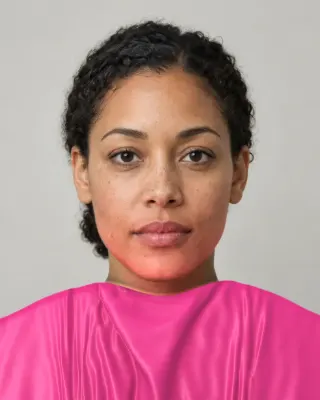
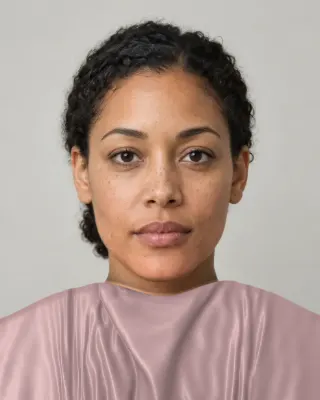
The Full Color Report: $19one time
You in your best and worst colors, about 40 colors with hex codes, makeup, hair and a capsule wardrobe plan.
See a sample reportCommon questions
- What is Korean color analysis?
- A consultation in which a trained analyst drapes fabrics against your face to place you in a season and tone, such as Summer Mute. It comes from Western seasonal analysis and Japan's PCCS tone system. Some studios add an instrument reading of your skin.
- Is Korean color analysis more accurate?
- We found no evidence that it is. Its tools can look more scientific, and a spectrophotometer does measure skin precisely, but no study we found shows that the resulting type suits people better. Korean researchers themselves say the classification has no industry standard.
- Do Korean studios work for non-Korean clients?
- Many take foreign clients, and some sessions are in English. Bear in mind that the modern Korean system was tuned around Korean coloring. Ask how the consultant handles very fair or deep skin, or lighter eyes and hair.
- Why do I get a different result in Korea than at home?
- Different categories, different anchors, and different fabrics. A Korean Autumn Mute isn't defined as a Western Soft Autumn, even if they look alike. Systems measurably disagree, so a change doesn't mean that either consultant was wrong.
- Should I go without makeup?
- Yes, or be ready to take it off. Makeup changes what the drapes and any instrument read. Some studios review your own makeup at the end, so bring your pouch.
- Can I get a Korean-style analysis outside Korea?
- In some large cities, yes: search personal color analysis with your city's name, and ask which system they use. Otherwise the closest thing at home is careful draping with real fabric, and tools like ours follow the same axes.

See which colors are yours.
See your colors on your own face, compare seasons side by side, and get your season, your undertone and a starter palette.