

What your answer usually means
The test is simple. Hold gold and silver near your face in daylight and see which one looks better. That answer is the first step in many a draping session: most open with gold against silver to get a direction for temperature. Here’s the traditional reading, with the caution each answer deserves:
| If this looks better | It’s taken to mean | Keep in mind |
|---|---|---|
| Gold | A warm undertone | A warm room makes gold look good on almost anyone. |
| Silver | A cool undertone | Bright polished silver can read as harsh on soft coloring, whatever the temperature. |
| Both | Often said to be neutral | Brilliant Earth, a jeweler, says outright that “a tied result doesn’t necessarily indicate neutral undertones”. |
| Neither | Rarely covered | Sometimes a sign of olive skin or soft coloring, where polished metal is too strong. Try matte. |
The same jeweler calls these tests “clues rather than definitive results”, which is the right way to hold them. A metal result is a vote about temperature. It isn’t your undertone, and it doesn’t oblige you to do anything.
How the tool on this page works
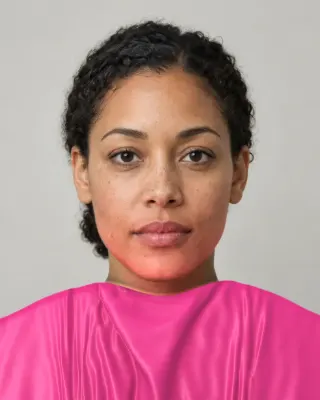
You start the same way as with the rest of the site: camera, photo or a fictional example person. Then a cloth appears under your chin in gold, silver or rose gold, with a metal edge at the neckline, following your head on camera. You switch between the three, and a line asks the question: which makes your skin look clear, and which makes it look tired? There are also two switches. Neutral room replaces your background with a plain wall. Before and after wipes between you with the metal and you without.
Three things you should know. It shows a full metallic fabric rather than a necklace, since a kit’s metallic drapes are large for the same reason: a large area makes the difference easier to see, and real jewelry is subtler. It shows one metal at a time, so you compare by flipping. And the verdict is yours. The tool asks which one won and tells you what that answer usually points to. It doesn’t detect which one is better, because that’s a judgment, and the metal on screen is drawn, not real. If you want your answer weighed against other evidence, take it to the undertone test, which asks about jewelry and weighs your reply against color rounds and a camera read.
Why this test so often disagrees with itself
You can get gold on Monday and silver on Saturday without anything being wrong with you. There are good reasons for it.
Metal is a mirror
This is the big one, and jeweler pages rarely mention it. A polished metal shows you a mirror-like reflection of whatever’s around it. Silver has the highest reflectivity of any metal and it returns colors more or less as they arrive, so its color at any moment is largely the color of your room. Gold is slightly reddish-yellow, because of how it absorbs part of the spectrum, so it tints everything it reflects. In a warm lamp, then, silver turns warm and gold turns richer. By a north-facing window, gold loses some of its glow.
“Gold” is many colors
Jewelry is an alloy. White gold covers a range that can border on pale yellow or a very pale rose. Rose, pink and red gold differ by their copper content: 18-karat red gold is 75% gold and 25% copper, and 18-karat pink gold has 20% copper and 5% silver. So a “gold” test with a pale chain and a “gold” test with a deep yellow ring are different tests.
Finish changes the answer
Polish sends sharp highlights back at you, while a brushed or antiqued surface spreads them out. Soft coloring often can’t take a hard highlight, so a person may reject bright silver and be happy in pewter. One Spanish guide to olive skin says that polished metals tell you little there, and recommends comparing old gold or bronze with aged silver. If you compare a shiny gold chain with a dull silver ring, you’re partly testing shine.
You’re testing your wrist, or your habits
Many people test on the wrist, which sees different sun from the face, and it isn’t where a necklace or an earring sits. There’s also familiarity. If you’ve worn one metal for fifteen years, it looks like you. Liking what you already own doesn’t tell you much about skin, and House of Colour makes a similar point about people favoring the colors they like.
You might really be in the middle
If you’re near neutral, there’s no strong answer to find, and small things will tip it either way. A result that keeps moving is a kind of answer as well.
How to run it so that it means something
- Match the pieces. Same size, same finish. Two plain chains or two polished rings. If you can, borrow what you don’t own.
- Find soft daylight. A window, away from strong colors. Red walls, green curtains and a yellow sweater all end up in the metal.
- Hold them near your face. At your jaw or collarbone, against bare skin.
- Look at the skin beside the metal. Does it look clear and calm, or does it turn sallow or grey? The metal might look lovely by itself. That isn’t the question.
- Do it twice. Another day, another window, or a friend who says which they’d pick before hearing your answer.
Then combine it with other clues. The vein test is a weak one. Warm and cool fabric is a strong one, and that’s the core of the undertone test. For what the two answers point to, see warm undertones and cool undertones. And what undertone means covers the idea behind it all.
What if both look good?
Good news: you get to wear both, and that’s the practical end of it. It may mean you’re near neutral. It may also mean that your depth or softness matters more to you than temperature, so that the finish and weight of a piece change the look more than its metal does. Mixed-metal pieces are worth a try. Pick by what you’re wearing that day.
Where rose gold fits
Lists online place rose gold all over the map. It’s easy to see why: rose gold is a gold and copper alloy, so it starts warm, but its pink can sit comfortably beside cool skin in a way that yellow gold can’t. Brilliant Earth’s guide suggests it for warm-leaning results and for neutral ones, and you’ll also see it listed for cool skin. There is no measurement behind any of these, ours included, so treat it as a question to test: hold it up, and see.
Our twelve palettes reflect that same split. Yellow gold is a best metal in 6 warm seasons and 0 cool ones, and silver is the mirror image, in 6 cool seasons and 0 warm ones. Rose gold crosses the line, with 2 warm seasons and 1 cool. So does white gold, with 4 cool and 1 warm.
| Season | yellow gold | rose gold | copper | bronze | white gold | silver | platinum | pewter |
|---|---|---|---|---|---|---|---|---|
| Light Spring | ||||||||
| Warm Spring | ||||||||
| Bright Spring | ||||||||
| Light Summer | ||||||||
| Cool Summer | ||||||||
| Soft Summer | ||||||||
| Soft Autumn | ||||||||
| True Autumn | ||||||||
| Deep Autumn | ||||||||
| Deep Winter | ||||||||
| Cool Winter | ||||||||
| Bright Winter |
Does it work on olive skin?
Not well, by several accounts, though they disagree about why. The Spanish guide mentioned above says that yellow gold brings out the yellow in olive skin while bright silver greys it, so neither looks right when polished. IPSY’s article leans the other way and quotes a color analyst steering cool-leaning olive skin away from gold, and a makeup artist saying most olive skin runs cool. These are professional opinions, with no data on either side. If your skin has that muted, slightly green or grey look, try matte and aged finishes first, and read our olive skin guide.
On deep skin
The test works the same way, and the good news is that the difference is often easy to see. Gold and silver both stand out against deep skin, so look at what happens to the skin around them: does it look rich and even, or ashy? Skip any advice that says one metal is for “dark skin” or another for “fair skin”. Undertone and depth are separate, and both metals can suit any depth.
You’re allowed to overrule it
Jewelry is personal in a way that clothes aren’t. People wear things for what they mean. If your grandmother’s ring is yellow gold and every test says silver, keep the ring. A small piece of metal won’t ruin your complexion. Use the test when you’re spending real money on something new and can’t decide. And if you’d like the rest of the picture, the season test covers your whole palette, metals included.