Seasonal color analysis: what it is and how it works
Seasonal color analysis sorts your coloring into a season, and that season into a palette of colors meant to flatter you. Four seasons came first and twelve is the common version now. It's a styling tradition with some real color science underneath it.
What is color analysis, and what does it claim?
The idea has three parts. Your natural coloring, meaning skin, hair and eyes, has an overall character: warm or cool, light or deep, soft or clear. Colors that share that character tend to look harmonious near your face, and colors that fight it tend to make you look tired or washed out. And that character can be summed up with the name of a season, because the palettes reminded early writers of the colors of the year: fresh and clear for spring, or earthy and rich for autumn.
The first part is a description anyone can check. The second has partial support, and our evidence page goes through it. The third is a metaphor. Carole Jackson, who made the system famous, called the seasons a convenient artifice, and said types A and B would have worked too, if less poetically.
Where did it come from?
There isn’t a single inventor. People usually credit Johannes Itten or Carole Jackson, and neither is quite right on their own. It came together over more than a century, from dye chemistry, art teaching and a good deal of commerce.
Two things stand out when you lay it out this way. The optics came first by over a century, and the seasons were added later, by people teaching and selling. And the boom came all at once: within about two years in 1978 to 1980, several books appeared with rival versions of the same idea.
How do 12 seasons differ from 4?
In the four-season version, you’re warm or cool, and then one of two. Spring and Autumn are warm, Summer and Winter are cool. It’s simple, and it leaves plenty of people in between. A woman who’s clearly soft but not clearly warm or cool has no good home.
The twelve-season version changes the question from “which family are you?” to “which trait is strongest in you?” Each season gets one dominant trait, and a second that leans it. That’s the grid at the top of this page. You can see the logic in the names: Soft Summer and Soft Autumn belong to different families but share a dominant trait, so they end up as neighbors.
Here’s what that looks like in numbers from our own palettes, which aren’t measurements of people. Our Soft Summer and Soft Autumn are both muted, Soft Summer the more so, and True Autumn is about twice as strong as Soft Autumn, even though it’s Soft Autumn’s own family. Their warmth is where they split: Soft Summer sits close to neutral and Soft Autumn leans clearly warm. So a salmon and a dusty rose are about equally light, with one warm and the other cool, and that’s the choice someone between those two seasons is really making. The full comparison gives more pairs.
Twelve isn’t the last word either. Some vendors now sell sixteen, and the names don’t even line up between them: the 16-season page maps the mess. Nobody has shown that any count works better than another.
The twelve, in a line each
| Season | Also called | Our one-line definition |
|---|---|---|
| Light Spring | Usually the same everywhere | Light first, warm second: delicate golden coloring that the fresh, sunlit end of the palette suits. |
| Warm Spring | True Spring | Warm above all, with a clear glow: golden coloring that lights up in sunny yellows, corals and greens. |
| Bright Spring | Clear Spring | Clear first, warm second: vivid contrast between skin, hair and eyes that needs saturated, warm-leaning color. |
| Light Summer | Usually the same everywhere | Light first, cool second: gentle rosy coloring that glows in airy blues, pinks and lilacs. |
| Cool Summer | True Summer | Cool above all, softened: rosy or neutral skin with ash tones that looks best in blue-based, gentle color. |
| Soft Summer | Usually the same everywhere | Muted first, cool second: low contrast and greyed tones, where nothing should shout and everything should blend. |
| Soft Autumn | Usually the same everywhere | Muted first, warm second: gentle, golden or olive-leaning coloring that loves earthy, blended color. |
| True Autumn | Warm Autumn | Warm above all, and earthy: golden or bronze coloring that looks richest in spice, moss and rust. |
| Deep Autumn | Dark Autumn | Deep first, warm second: rich dark hair and eyes with warmth in the skin, at home in dark earth and spice. |
| Deep Winter | Dark Winter | Deep first, cool second: dark hair and eyes with a cool or neutral cast, built for black, white and jewel tones. |
| Cool Winter | True Winter | Cool above all, and clear: blue or neutral undertones with crisp contrast that needs pure, icy, saturated color. |
| Bright Winter | Clear Winter | Clear first, cool second: the strongest contrast of all the seasons, made for saturated color and pure black and white. |
Aliases hold “usually”, and only in twelve-season systems. Our definitions come from the tradition, and we chose the wording. The chart shows all twelve on one page.
How a result is reached
In person, by draping. An analyst holds dyed fabric under your chin, in controlled light, and you both watch what happens to your skin. Pairs narrow things down. This is the method the tradition was built on, and its strength is that you see it yourself. Its weakness is that it depends on one person’s eye and one set of fabrics.
From a photo, by software or a person. Quicker and cheaper, but it reads a camera’s version of your skin. How software does this has the numbers on what white balance alone can do.
By quiz. You describe your veins, your hair and how you tan. Ours says plainly that it’s the rough version, and it’s a fine place to start.
Our season test combines a calibrated camera read with color rounds where you choose. Nothing is drawn on your face: your season, palette and colors appear beside your photo.
What’s tradition, and what’s measurement?
This is the part most guides skip. We’d rather you knew which claim you’re relying on.
| Claim | What it rests on |
|---|---|
| Neighboring colors change each other | Measurement. Simultaneous contrast has been studied since Chevreul. |
| Fabric throws colored light on skin | Measurement. Mutual illumination is a known effect. Its size on a real chin is another matter. |
| Color can be described by hue, lightness and strength | Measurement, with a caveat. Munsell’s system and the measurements built on it are real, but one study found personal color systems rarely apply these dimensions to their own palettes. |
| People have a warm or cool lean | Partly measured. It’s the seasonal idea with the best support, and it still isn’t settled. |
| There are four seasons, or twelve, or sixteen | Convention. Encyclopedia editors call them “to some degree, arbitrary”. |
| Each season has a particular list of colors | Editorial. Lists differ by system. Ours are about 480 colors we chose by hand and checked by the numbers. |
| You have one season for life | Tradition. Kentner taught that a tan changes the hue and not the type. We found no test of it. |
Is it the same in every country?
No, though the ideas travel. Korea and Japan usually call it personal color, name types by season and tone, and have a research literature of their own, as the Korean page explains. In Italy it goes by armocromia, a word you’ll also meet in computer vision papers. Spanish speakers often say colorimetría. When people compare results across borders, they’re comparing systems that measurably disagree.
How to use it without believing too hard
- Hold on to the axes more than the name. “I look better in soft, cool colors” survives a change of system. “I’m a Soft Summer” may not.
- Keep your runner-up. Most people have one, and its colors are usually fair game.
- Care most near the face. The effect is about what’s next to your skin, so shoes and skirts are free.
- Overrule it. If you love a color outside your palette, wear it. It’s a convention, and nothing bad will happen.
Related guides and tools
Sources
- Color analysis
- Carole Jackson
- Bernice Kentner
- Johannes Itten
- Munsell color system
- The laws of contrast of colour and their application to the arts, paragraphs 498 to 544. Trans. John Spanton (1861), from the 1839 French
- Consultants help decide which color are best for you. Evelyn Radcliffe
- Color: The Essence of You. Suzanne Caygill (Celestial Arts, 1980), digitized record
- It all goes back to Caygill: a family tree of color analysis systems
- Personal color analysis
- Women of color: the multicultural guide to fashion and beauty. Darlene Mathis, foreword by Carole Jackson (catalog record, read through a search excerpt)
- Practical Color Coordinate System
- Research of quantitative modeling that classify personal color skin tone. Kim YH, Oh YS, Lee JH
- Comparative analysis of diagnostic results of domestic and foreign personal color systems: UK, Japanese, Korean, German. Cha HY, Bang HJ, Kim JH
- Personal colour analysis, consumer colour preferences and colour forecasting for the fashion and textile industries. Cassidy TD
- Deep Armocromia: a novel dataset for face seasonal color analysis and classification. Stacchio L, Paolanti M, Spigarelli F, Frontoni E (project poster)
- Color analysis service
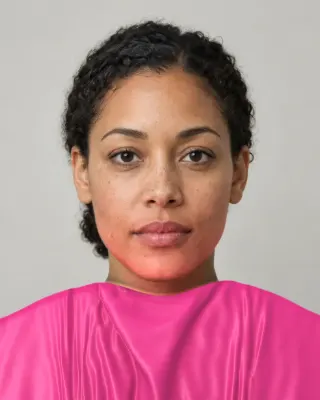
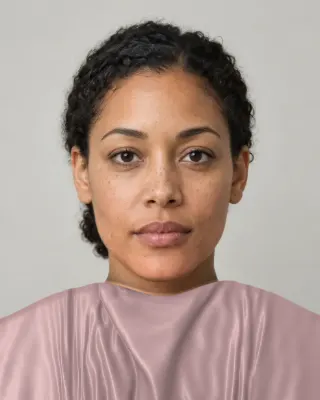
The Full Color Report: $19one time
You in your best and worst colors, about 40 colors with hex codes, makeup, hair and a capsule wardrobe plan.
See a sample reportCommon questions
- Who invented seasonal color analysis?
- Nobody alone. Johannes Itten linked colors to four seasonal types in 1961. Suzanne Caygill was typing clients in California for decades, and Bernice Kentner and Carole Jackson popularized it in books around 1980. Kathryn Kalisz is usually credited with the twelve-tone version around 2001.
- Is seasonal color analysis scientific?
- Parts of it rest on real color science, such as contrast effects and color measurement. We found no study validating the sorting of people into seasons, so the system as a whole is a styling tradition rather than a tested result.
- What's the difference between seasonal and personal color analysis?
- Mostly the word and where it's used. Seasonal is the usual English term, tied to the Spring, Summer, Autumn and Winter names. Personal color is the common term in Korea and Japan, often with tone names and sometimes with instrument readings.
- What are the 4 seasons in color analysis?
- Spring and Autumn, which are warm, and Summer and Winter, which are cool. Spring is lighter and clearer than Autumn. Summer is softer and lighter than Winter. Twelve-season systems split each into three.
- Can my season change over time?
- The tradition says no, though a natural change such as graying can shift what suits you, and analysts may offer a recheck after years. A tan or dyed hair isn't meant to change it. We found no study that tests this.
- Do I need to know my season to dress well?
- No. It's one structured way to reach colors that suit you, not a requirement. If you already know which colors make you look awake, you've got the useful part.

See which colors are yours.
See your colors on your own face, compare seasons side by side, and get your season, your undertone and a starter palette.