Soft Autumn hair color: shades that keep you muted
Muted warmth: soft golden browns, caramel and browned copper near your natural level. A chart of levels against tone words, what to ask your colorist for, and what will fight you.
Ash-2
Natural-0
Beige-4
Gold-5
Soft copper-7
9Extra light blonde
8Light blonde
7Medium blonde
6Dark blonde
5Light brown
4Medium brown
3Dark brown
Warm, with the volume down
A Soft Autumn wants warmth in the hair and very little strength. Soul of Color describes natural hair around level 5 to 8 with a soft golden glow, usually not much darker than the skin. Another of its articles says 3N to 7N, so treat the numbers as a rough range. What both agree on is the quality: muted, blended, no hard edge between hair and face.
The chart above tells you what that means in a salon. Look at the columns. Ash takes all the warmth out. Gold puts it in at full strength. And the column between them is the one to remember: Schwarzkopf’s Igora system describes its -4 tone, beige, as “muted gold”. That’s this season in two words, printed on a professional color chart. If you learn one piece of salon vocabulary from this page, make it that one.
Blonde, brunette or red?
Brunette
The easy home. Soul of Color suggests a light golden brown at about level 5 to 6 and caramel brown at 6 to 7. L’Oréal Paris, writing about warm skin in general, describes the same family, with hints of gold or red, and for a fair warm complexion suggests honey, caramel and wheat babylights through a light golden brown base. Keep those babylights quiet here. Fine, blended pieces suit this season better than bold ribbons.
Blonde
Possible, in a dark, soft version. Soft caramel blonde and “old money” blonde at around level 7 to 8 are on Soul of Color’s list, and platinum is on its avoid list. If you’re naturally brown and want to go lighter, the usual advice is to stay within a level or two of your base. Wella’s own example of a highlight is useful here: lifting sections of a dark brunette to about level 6 brightens the warm pigment already there and makes a base for a deep caramel.
Red
A browned, soft copper can work, in the area our chart outlines. Vivid copper and true red are stronger than anything on the board, whose loudest color is Brick Rose, and those belong to True Autumn, where Soul of Color places rich copper and auburn.
What will fight you
- Very ashy tones. They’re the opposite of what your skin is doing. Soul of Color puts overly cool tones first on its avoid list, and on our chart ash reads as grey beside warm skin. If you have naturally ashy pieces in your color, you don’t need to fight them, since Soul of Color’s natural range does include some ash browns.
- Platinum and jet black. Both are far from the middle of the scale where this coloring sits. A level 1 is close to black, and the darkest color on our Soft Autumn board is the far lighter Soft Mahogany.
- Bright copper and strong gold. Right temperature, wrong volume, in the same way a coral lipstick is. A shop’s “golden blonde” can overshoot just as easily as a copper.
One useful effect works in your favor. According to a California cosmetology study guide, warm tones look lighter than their actual level and cool tones look darker. So a little warmth can make hair seem lighter and softer without lifting it any further, which also means less processing.
What to ask your colorist for
Words first. These are the tone names on a professional chart, and what they mean for you.
| Word | Igora | For a Soft Autumn |
|---|---|---|
| Natural | -0 | A safe base. Neutral, with little reflect. |
| Beige, muted gold | -4 | The target. Warmth with the brightness taken off. |
| Gold | -5 | A little goes a long way. Ask for it as a secondary tone. |
| Copper | -7 | Only as a hint, mixed down. |
| Matte | -3 | Green-based. A colorist may use it to quiet too much red. |
| Ash | -2 | Blue-based. Usually the one to avoid. |
Say this
“I’d like a soft, warm brown around my natural level. Beige or muted gold, not bright gold. If you add highlights, keep them fine, a level or two lighter, in caramel. Please no ash, and nothing that will turn orange as it grows out.”
Lifting always exposes warm pigment. Kenra Color’s manual lists orange at level 5, gold orange at 6 and gold at 7. Wella calls the colorist’s choice one of working with that pigment, neutralizing it, or enhancing it. For most seasons brass is the enemy. For you it’s nearly an ally, and what you want is for it to be softened, so ask them to take the edge off and leave the warmth. On a box, Soul of Color suggests looking for “golden”, “caramel” or “natural” and the letters G or N. Wella frames the result as your hair’s starting point plus the color chosen, so neither we nor a swatch can promise what you’ll get.
If your hair changes, does your season?
In traditional color analysis, no. Most of the classic authors agreed that your season stays with you for life, and that skin decides it, not hair. Bernice Kentner’s 1978 book warned readers not to rely on hair coloring to find their season. But that isn’t the whole story, for two reasons. L’Oréal Paris points out that a new hair color can change your contrast level. And any camera tool reads what’s in the picture, including ours. Here’s what our own scan does.
| Hair | Contrast | Top guess | Runner-up |
|---|---|---|---|
| Dark brown | 0.87 | Bright Spring | Warm Spring |
| Medium golden brown | 0.40 | Warm Spring | Bright Spring |
| Dark beige blonde | 0.07 | Warm Spring | Bright Spring |
| Light golden blonde | -0.07 | Warm Spring | Light Spring |
| Light ash blonde | -0.07 | Light Spring | Warm Spring |
The skin and the eyes never change in that table. With dark brown hair the contrast meter reads 0.87 and the top guess is Bright Spring. With light golden blonde it falls to -0.07 and the guess becomes Warm Spring. That’s a fictional face, so it says nothing about how often this happens on real ones, but the mechanism is real. If you’ve dyed your hair a long way from your natural color, take any scan with your roots in mind. Our quiz asks about hair before any dye for this reason, and the color rounds in the season test don’t depend on your hair at all.
Going grey
Grey hair isn’t grey pigment. It’s hair that has lost its melanin, and it looks grey or white from the way light reflects off it. On warm skin, stark silver can read as cool next to the face, so some Soft Autumns prefer to soften it with fine, warm lowlights. Others wear it as it comes, and look fine. Nothing here says you need to do anything about it. If you do let it grow in, your palette may need a small shift toward its softer colors, such as Oat Milk and Sage.
Try it before you book
The hair try-on has ten fixed chips. Honey blonde, Chestnut and Copper are the warm ones to try, and Ash blonde and Silver show you what the other direction does. None of them is a muted caramel, so read them as direction and don’t expect to see your final shade. Then compare with your makeup colors, because hair and lips have to live on one face. The rest of the season is on the palette page, and the Full Color Report shows hair colors on you for your own palette.
Related guides and tools
Sources
- Autumn Celebrities: Color Analysis
- Hair Colors for Autumn Seasons
- How To Find the Most Flattering Brunette Hair Color for Your Skin Tone
- What Is the Contrast Makeup Theory?
- Human hair color
- The IGORA numbering system
- Koleston Perfect, technical folder
- Color Manual
- Your Guide to Wella's Hair Color Charts
- Haircolor principles and color theory
- Color analysis
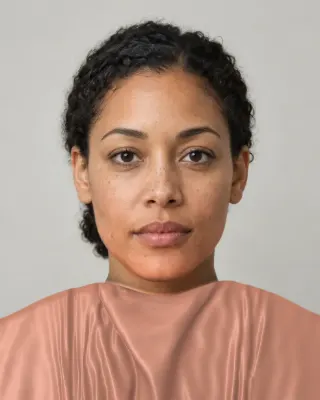
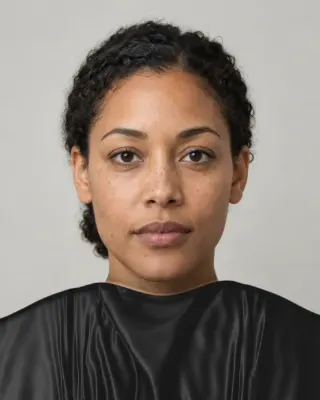
The Full Color Report: $19one time
You in your best and worst colors, about 40 colors with hex codes, makeup, hair and a capsule wardrobe plan.
See a sample reportCommon questions
- What hair color suits a Soft Autumn?
- Soft, warm and not too far from your natural level: light golden brown, caramel brown, muted dark blonde and a browned copper. Ask for beige or muted gold tones, since bright gold and strong copper overshoot.
- Should a Soft Autumn be blonde, brunette or red?
- Brunette is the easy home. Blonde can work in a dark, soft version around level 7 to 8. Red works best as a browned copper, since vivid reds are stronger than anything in this palette.
- What hair colors should a Soft Autumn avoid?
- Very ashy tones, platinum, jet black, bright copper and strong yellow gold. Each one pushes contrast or color beyond what the rest of the palette does. Ash and platinum also tend to look grey or chalky next to warm skin.
- What should I ask my colorist for as a Soft Autumn?
- A soft warm brown near your natural level, in a beige or muted gold tone, with fine caramel highlights no more than a level or two lighter. Mention that you'd like warmth with the edge taken off, and bring a photo.
- Do balayage highlights suit a Soft Autumn?
- Yes, if they stay close to the base. Soul of Color suggests soft golden or caramel pieces a level or two above it. Wider, high-contrast ribbons add a sharpness that this season doesn't otherwise have.
- Can a Soft Autumn have dark hair?
- Yes. Soul of Color's range runs down to 3N, and on medium or deep skin darker hair can still be low contrast. What this season tends to avoid is flat, cool jet black, so ask for a soft dark brown with a little warmth.

See which colors are yours.
See your colors on your own face, compare seasons side by side, and get your season, your undertone and a starter palette.