Compare
Soft Autumn vs True Autumn: muted or golden?
Same warm side of the wheel, very different strength. In our palettes True Autumn is almost twice as vivid as Soft Autumn. If a saturated rust looks like you, you lean True. If it wears you, you lean Soft.
What’s the difference?
Think of one autumn color with a volume knob. True Autumn plays it loud and Soft Autumn plays it low. In the chart above, every one of the 8 hue pairs moves the same way: Soft Rust goes to Rust, and Soft Mustard goes to Mustard. On average True Autumn is almost twice as strong. Hue, lightness and strength are Munsell’s three dimensions, and this pair differs on the third far more than the others.
Warmth moves with it, and True Autumn is the warmer by a clear margin. That isn’t really a second, separate difference. A color can’t be warmer than it is colorful, so a greyed rust has less warmth to show than a full one. Lightness moves a little too, with True Autumn the deeper. The right-hand chart sets those three gaps side by side at one scale. This describes the palettes we built, and nobody’s face, so read big gaps and ignore tiny ones.
Beyond the averages, look at what each palette holds at the top. 35% of True Autumn counts as vivid in our bands, and none of Soft Autumn does. 50% of Soft Autumn counts as muted, against 7.5% of True Autumn.
Am I soft or true?
You’re comparing one question at a time: same hue, two strengths. By a window, no makeup, hair tied back.
- Start with Soft Rust under your chin, then Rust. Don’t judge the color. Watch your face.
- Repeat with Soft Mustard and Mustard, then with Terracotta and Burnt Sienna.
- Ask which version your eye goes to first. If you see the garment before you see yourself, that one’s too strong. If you look a bit washed or sleepy, that one’s too weak.
- Check for the same answer on a second pair before you trust it. One color can be a fluke, especially yellow.
PersonalColorAI runs a similar test with terracotta against dusty peach, adding that a Soft Autumn in full terracotta “reads too loud”. A real draping session looks at the same signs: how shadows fall, how even the skin looks, whether teeth read whiter or yellower. A real rust scarf by a real window is the surest version.
Where sources agree and differ
They mostly agree on the direction. The Concept Wardrobe says Soft Autumn colors are “softer, slightly lighter, and less warm than those of True Autumn”, and our numbers match all three. Kettlewell Colours calls True Autumn an even mix of Autumn’s warm, soft and deep traits, and says soft is Soft Autumn’s dominant one.
The word to watch is “muted”. Soul of Color titles True Autumn “Warm, Muted & Deep”, while PersonalColorAI treats the same position, under the name Warm Autumn, as “vivid and golden”. Those aren’t compatible, and they’re both describing a real tradition: compared with a Spring or a Winter, autumn colors are earthy, and compared with a Soft Autumn they’re loud. Where we stand: on our board, True Autumn’s 35% vivid share makes “muted” a poor word for it. If an analyst told you True Autumn means dusty colors, it’s worth checking what palette they mean.
Warm Autumn itself isn’t always the same thing. Kettlewell and Agile Styling both give it a separate position from True Autumn, warmer or brighter than the middle. Here the two names are one season, following most lists.
What about hair and metals?
Hair. Soul of Color puts True Autumn hair at levels 2 to 6 with a “golden or reddish glow”, and Soft Autumn at 3 to 7 with “soft golden warmth”, often not much darker than the skin. Those mostly overlap, so a level won’t place you. Bright copper or auburn dye can make anyone look like a True Autumn in a photo, while grey blending or heavy highlights can make them look soft. If you’ve dyed for years, leave your hair out of the test.
Metals. Our boards give rose gold, bronze, yellow gold to Soft Autumn and yellow gold, copper, bronze to True Autumn, so yellow gold and bronze are shared. Finish matters as well. Our note for Soft Autumn reads “Matte or brushed gold, rose gold and bronze. Bright silver looks harsh.” PersonalColorAI’s version of the test is pure yellow gold against rose gold. If pure gold feels harsh but rose gold looks fine, it reads that as a Soft Autumn sign.
Black, white and the avoid list
Both palettes list black as an avoid, and neither carries it. True Autumn gets closer with Bitter Chocolate, a deep brown, while Soft Autumn stops around the clearly lighter Soft Mahogany. So a Soft Autumn who tries True Autumn’s deepest browns may find them heavy, and a True Autumn in Soft Autumn’s darkest color may wonder where the depth went. That’s a useful second test after the rust.
The same outfit, two ways
Picture a camel coat over a rust knit with olive trousers. It works for both seasons, and the difference is entirely in the strength of each piece. For True Autumn that’s Camel Tan, Rust and Olive. For Soft Autumn it’s Soft Camel, Soft Rust and Soft Olive. Fabric can do part of the work: heathered wool, washed linen and suede all read softer than a crisp cotton in the same dye, so a Soft Autumn can sometimes wear a stronger hue in a duller cloth.
Makeup follows too. Our starting points for lips are “Warm rose, soft terracotta and peach nude.” for Soft Autumn and “Brick, terracotta and warm cinnamon.” for True Autumn. The same peach nude that looks polished on one can look unfinished on the other, and a brick lip that looks right on True Autumn may be the first thing you see on Soft.
If you land between them
These are neighbors on the wheel, and the seasons were never exact categories. If the middle strength looks best, buy the middle. Muted Pumpkin and Camel Tan are close enough that they’d sit comfortably in either wardrobe. You’ll find all the hex codes on the Soft Autumn palette and the True Autumn palette. What season am I is the longer route if you’re no longer sure you’re an autumn.
Related guides and tools
Sources
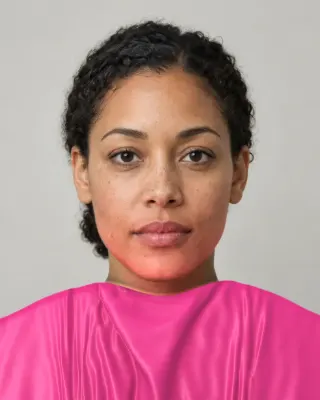
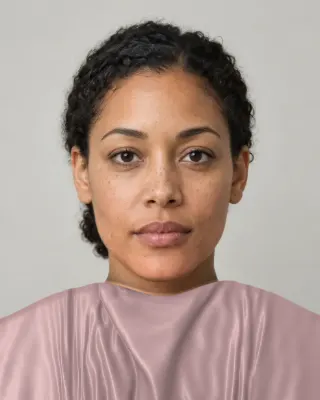
The Full Color Report: $19one time
You in your best and worst colors, about 40 colors with hex codes, makeup, hair and a capsule wardrobe plan.
See a sample reportCommon questions
- What's the difference between Soft Autumn and True Autumn?
- Strength. Both are warm and earthy, but True Autumn carries full-strength colors and Soft Autumn carries greyed ones. In our palettes True Autumn is almost twice as vivid on average.
- Is Soft Autumn less warm than True Autumn?
- In our palettes, yes, clearly. That follows from the strength, since a greyed color has less warmth to show. Soft Autumn is warm, just quietly so.
- Which is lighter, Soft Autumn or True Autumn?
- Soft Autumn, by a modest amount in our palettes. Guides agree on that direction, but it's a weaker clue than strength of color.
- Is Warm Autumn the same as True Autumn?
- On most lists and on this site, yes. Some systems separate them, with Warm Autumn as the warmer or brighter edge of the family. If you have a printed palette from one of those systems, follow it.

See which colors are yours.
See your colors on your own face, compare seasons side by side, and get your season, your undertone and a starter palette.