Compare
True Summer vs Soft Summer: the difference explained
True Summer, also called Cool Summer, holds about twice the color of Soft Summer in our palettes. The surprise is that Soft Summer is the less cool one.
Cool Summer is this site’s name for True Summer.
Is Cool Summer the same pair?
On this site, yes: True Summer and Cool Summer are one season, shown under the name Cool Summer, so “cool summer vs soft summer” and “true summer vs soft summer” are the same question. Most guides agree, and FRANKIE4 writes “True Summer (otherwise known as a Cool Summer)”.
The exception is the 16-season system, in which Agile Styling counts Cool Summer as its own added season. It also renames Soft Summer as Muted Summer and warns the palettes aren’t necessarily identical. If an analyst gave you a printed fan, go by the fan. For everyone else, read on.
The difference is strength, not direction
Both seasons live on the cool side, and neither carries a true black. The clearest split is how much color each one holds. Look at the bars above, which share one scale, and then at the swatch pairs: same hue, two strengths. Rose becomes Dusty Rose, and Periwinkle becomes Dusty Periwinkle. In our palettes, 15% of True Summer counts as vivid and none of Soft Summer does, while 75% of Soft Summer counts as muted against 37.5%.
This describes the palettes we built, and it isn’t a measurement of people. Color measurement isn’t perfectly even to the eye, especially among blues, so don’t read much into a small gap. Twice the strength is a different matter.
Soft Summer is the less cool one
People assume these two rank the other way, since Soft Summer gets called cool and muted, as if muted meant extra cool. In our palettes True Summer leans clearly cool, while Soft Summer sits close to neutral.
The reason is simple geometry. A color can’t be more cool than it is colorful, so when you grey a color down, its temperature shrinks along with it. That matches how PersonalColorAI puts it, with True Summer “cool” and Soft Summer “cool-neutral”. It also explains why our Soft Summer board can hold a slightly warm color like Rose Brown: at that level of dustiness, the warmth doesn’t shout.
A disagreement over which is darker
The Concept Wardrobe says Soft Summer colors are “more muted, warmer and ever so slightly darker than those of True Summer.” Our palettes agree with the first two and not the third: Soft Summer comes out a little lighter on average.
Neither of us is wrong about our own colors. Ours differ because True Summer has more reach in both directions, darker at the bottom and lighter at the top, and 10% of it is dark against 5%. Where we stand: there’s no agreed answer on lightness, so don’t use it for this pair. Strength is what you want to look at.
Contrast: another place sources split
Soul of Color says you’ll notice “some contrast” in True Summers, with hair darker than skin, and for Soft Summers “no harsh contrasts between hair and skin and eyes.” Kettlewell Colours describes True Summer differently, as “not a great deal of contrast”. PersonalColorAI lands between the two, with Soft Summer low and True Summer “low to medium”. So contrast can give you a hint, at most. It’s also the first thing a hair dye changes.
How to tell at home
You want to see whether the stronger color looks like you or looks like a costume. By a window, no makeup, hair back, one piece at a time:
| Cool Summer | Soft Summer | Soft Summer is | If the first one wins |
|---|---|---|---|
| Rose | Dusty Rose | much softer | Your skin holds up to clear pink. A point for True. |
| Cornflower | Muted Cornflower | a little softer | Your eyes pick up the blue instead of the blue taking over. |
| Blue Grey | Pewter | a little softer | A grey with some blue reads fresh, and pewter looks a bit flat. |
| Marine Navy | Storm Navy | a little softer | Deeper, inkier navy holds. True Summer can take a stronger dark. |
Watch what the strong color does in the first second. On a True Summer it should sit level with your face. On a Soft Summer the same piece tends to arrive first, and your skin can look grey or tired beside it. The same guide offers the same idea: hold a clear cool color against a dusty one, and if the dusty one harmonizes better, you’re Soft rather than True.
Real fabric in daylight is the best check, and the season test reads your own face if you have none. If you want more reference, see the Cool Summer palette and the Soft Summer palette.
What about hair, and black?
Soul of Color gives True Summer hair “around a level 3-6” and Soft Summer around 4 to 7, both ashy. Those ranges share most of their width, so hair can’t decide this. Check your own roots if you’re curious, in daylight, and ignore childhood photos.
Black is a closer call than people expect. It’s on Soft Summer’s avoid list on our board, and our True Summer board doesn’t carry it either, topping out at Marine Navy for depth. Neither season has to throw out a black coat. Add a scarf from your palette between it and your skin. If you can carry black with no help at all, you might want to look at the winters next: what season am I will walk you through it.
What it means for your closet
The difference between these two is less about which colors and more about how clean. A True Summer can buy color at its full strength, and a Soft Summer does better with a washed, heathered or garment-dyed version of nearly the same hue. Here are a few jobs, side by side:
| The job | Cool Summer | Soft Summer |
|---|---|---|
| Pale top | Rose White | Oyster |
| Coat or suit | Dusk Navy | Deep Slate |
| Statement piece | Fuchsia Rose | Greyed Raspberry |
| Green for evening | Cool Evergreen | Spruce Grey |
Makeup follows the same logic. Our starting points are “Cool rose, raspberry and berry.” for Cool Summer and “Muted rose, mauve and soft berry.” for Soft Summer. Liner shows the gap best, with “Slate, plum and cool taupe. Navy or charcoal liner.” on one side and “Soft taupe, smoky grey and muted plum. Soft brown-grey liner, smudged.” on the other.
One practical trick works for both. If you love a piece that’s a little too strong for you, wear it away from your face. Trousers, shoes and bags can sit outside your palette with little effect, so you don’t need to settle this question to get dressed.
If both look fine
Then wear both, and pick by what you like. The two palettes sit next to each other on purpose, and where they meet there’s no line you could draw on a person. The difference between clean and dusty is partly a matter of taste, and people’s preferences are a fine way to break a tie.
Related guides and tools
Sources
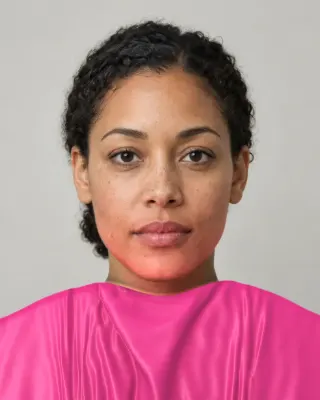
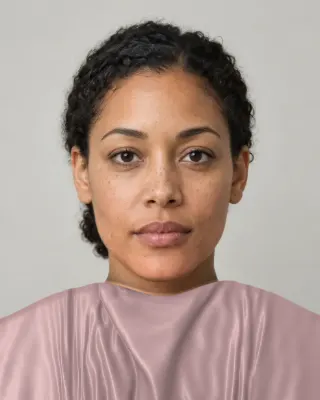
The Full Color Report: $19one time
You in your best and worst colors, about 40 colors with hex codes, makeup, hair and a capsule wardrobe plan.
See a sample reportCommon questions
- What's the difference between True Summer and Soft Summer?
- Strength of color, mainly. Both are cool-leaning and muted, but True Summer can carry cleaner colors, about twice as strong on average in our palettes. Soft Summer is greyer, and because of that it sits closer to neutral.
- Is Cool Summer vs Soft Summer the same comparison?
- On this site and in most 12-season systems, yes. In a 16-season system Cool Summer is its own season, so if your result came from one of those, check its palette against the one here.
- Is Soft Summer warmer than True Summer?
- In our palettes, slightly. It isn't warm. Greyed colors simply have less temperature to show. So it's closer to neutral than True Summer.
- How can I tell if I'm True Summer or Soft Summer without a color analyst?
- Hold a clean cool color against a dusty version of the same hue in daylight, no makeup, hair back. If the clean one looks level with your face, lean True. If it arrives before you do and the dusty one settles things, lean Soft.

See which colors are yours.
See your colors on your own face, compare seasons side by side, and get your season, your undertone and a starter palette.