ChatGPT color analysis: what it gets right and wrong
For a color analysis, ChatGPT will happily give you a season from a selfie, and its explanation will sound convincing. What it can't do is see past your camera, or compare fabric on your skin. It's a good writing partner for a palette and a shaky judge of what your palette is. We haven't tested it ourselves, so we'll say what's known and how to check.
First, what we haven’t done
Nobody on this site has run ChatGPT on real photos in a controlled way, so you won’t find a “we tested it” section here. Everything below comes from how cameras and chat models work, from other people’s published attempts, and from things you can check for yourself. If you came for prompts, they’re on the prompt page.
What it does well
People use it for good reasons, and it would be silly to pretend otherwise.
- It explains itself. A chat answer can say why it thinks you lean soft or warm, in sentences you can argue with. Even Perfect Corp, whose own tool wins its comparison, says it felt like talking to a real analyst and that its reasoning was transparent.
- It takes follow-ups. “Why not Soft Summer?” is a question no quiz will answer.
- It turns a season into a plan. Capsule wardrobes, lipstick families, what to search for in a shop: this is where it’s most useful, because the task is about language and lists. StyleCard, which sells a rival tool, gives the same advice: use it after you’ve got a likely season, not as the only diagnostic.
- You probably already have it. It costs nothing extra to try.
What it can’t do
These limits come from the setup, so better prompts can reduce them without removing them.
| The limit | Why | What you can do |
|---|---|---|
| It reads your camera’s version of you | Phones set white balance by adjusting all the colors in the picture. The file holds the result, and nothing tells the model how far off it is. Warm living room light and a warm undertone can look the same in pixels. | Photograph white paper in the same light, and ask it to judge the paper first. |
| It can’t run a duel | Draping works by comparison: the same face, the same light, two fabrics. A chatbot sees a still picture, usually in one top. It describes what it sees and can’t try something else. | Send two photos, same pose and light, in two colors, and ask it to look only at your face. |
| It doesn’t have your eyes | The point of a drape is that you see your own skin change. A verdict from elsewhere gives you nothing to check it by, and an articulate wrong answer is hard to spot. | Hold the colors it suggests against your face by a window. |
| One picture has to stand for you | A flush, a tan, makeup, dyed hair or a filter all end up in the same pixels. The model may notice some of these, and it can’t know what it can’t see. | Say what’s dyed, and send several photos taken at different times. |
| There’s no calibrated reference behind it | It draws on what has been written about seasons, and that disagrees across systems. Different writers mean different palettes by the same name. | Ask it to give you temperature, depth and clarity, not just a name. |
What other people report
These are other people’s attempts, not ours, and each one is a single person. Taken together, they show the pattern better than any one of them.
- Henriette Verheul, on a Rotterdam School of Management blog, already had a professional Soft Summer result. Using photos and sampled hex codes, ChatGPT said Soft Autumn. She judged that it handled surface qualities well, such as muted against bright, and that its undertone call was essentially a guess. She calls it impressively close, and still wrong.
- Yuhang Ding, on the same blog, sent RGB values from a sunlit selfie, got Deep Autumn and felt it fit very well. There’s no independent check of that one.
- Kettlewell, a retailer that sells in-person sessions, tried a neutral selfie of someone with a known warm season. It answered Summer, and said to avoid camel, tomato red and olive, which are that person’s go-to colors.
- Golden It Girl, in a popular walkthrough, calls the method “shockingly accurate” and shows no output or test behind it. That’s a useful example of how the idea spreads.
Notice what’s going on in the first and third: the error is in temperature. That fits what the camera argument predicts. Softness and depth are fairly visible in a photo, while warm against cool is the very thing white balance moves. That’s our inference from a handful of accounts, and it would be a good thing to test.
Why do the answers change?
There are at least three separate reasons, and it helps to keep them apart.
- The photo changed. A different room or time of day is different data. An app developer says as much on its App Store page: different results from different photos are normal.
- The model isn’t built to repeat itself. Chat models don’t return identical words each time, as you can see by pressing regenerate on any answer. If a season sits close to a boundary, a different wording may land on a neighbor. We found claims that this happens often, and no published test measuring how often, so we won’t put a number on it.
- The conversation steers it. If you’ve said you think you’re an Autumn, or the app remembers earlier chats, that can shape the answer. Start a fresh chat, and don’t mention your guess.
How to check what it told you
Here’s a free check. It tests whether the answer is stable, and then whether it holds up on your actual face.
- Take one good photo by a window, with no filter. That’s photo A. Take two more in other light, as photos B and C.
- Open a new chat for each run and use the same prompt each time. Run photo A three times, and B and C once each.
- Enter the answers below.
- Take the two seasons it mentioned most, and compare two tops of each by a window. Your eyes get the final vote.
Enter at least two answers to compare them. If it used another name for a season, pick the closest.
The undertone test is a good next step if it’s temperature that keeps flipping, and the scan reads your own face from your camera without leaving home. Finish with real cloth if you can.
Is it safe to upload my photo?
You’re giving a company a clear picture of your face, so it’s worth checking the current settings. OpenAI’s help center says data sharing for model improvement is on by default on personal Free, Plus and Pro plans, and that you can turn it off in Settings under Data controls. Business, Enterprise and Edu accounts aren’t trained on by default. Its page refuses automated reading, so we read that through search excerpts: please check the page yourself, because these details change. If you’d rather not upload at all, you can describe your coloring in words. That’s much rougher, and the prompt page has a version for it. AI color analysis more broadly has the same questions to ask of any tool.
ChatGPT, a dedicated tool or a person?
| ChatGPT | Our free scan | An analyst | |
|---|---|---|---|
| Corrects for your light | Only if you ask, and only roughly | Against white paper, and shows you the shift | Controls the room |
| Compares colors on your face | Only between photos you send | Color rounds beside your photo | Real fabric, real reflected light |
| Gives reasons | Yes, at length, and it can be confidently wrong | Readings and a short why | Yes, and you can see it too |
| Takes follow-up questions | Its best feature | No | Yes |
| Tested on real people | Not that we could find | Not yet | Not as a method, in what we found |
| Cost | Free tier available | Free | About $150 to $400 and up |
Our suggestion: use something that corrects for light and involves your eyes to find the season, then bring the answer to ChatGPT and ask it for outfits. Our evidence page explains why you shouldn’t take any of these as settled, ours included.
Related guides and tools
Sources
- I tried ChatGPT and other AI color analysis. Here's what I found
- ChatGPT color analysis prompt: what to ask and what to avoid
- How to discover your color analysis using ChatGPT (yes, really)
- Can ChatGPT do your color analysis? Henriette Verheul
- Color analysis, pictures and GenAI. Yuhang Ding
- Does AI colour analysis work? We tested three of the most popular AI colour analysis apps
- Color balance
- Color Analysis: Dressika
- Comparative analysis of diagnostic results of domestic and foreign personal color systems: UK, Japanese, Korean, German. Cha HY, Bang HJ, Kim JH
- Data controls in ChatGPT
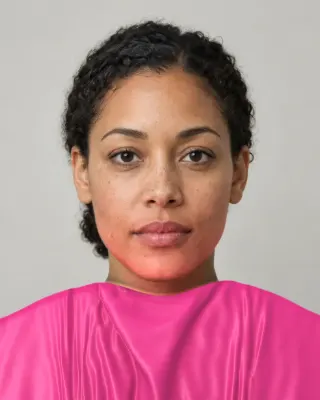
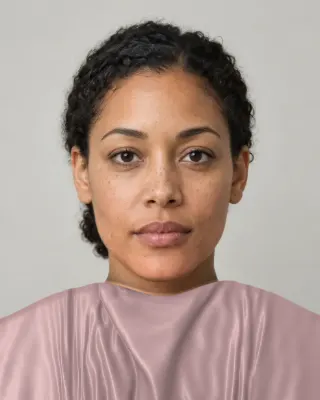
The Full Color Report: $19one time
You in your best and worst colors, about 40 colors with hex codes, makeup, hair and a capsule wardrobe plan.
See a sample reportCommon questions
- Can ChatGPT do color analysis?
- It can give you a season and a plausible explanation from a photo. It can't correct for your camera unless you help it, and it can't compare fabric on your skin. Treat it as a first guess and a helper for planning outfits.
- Is ChatGPT color analysis accurate?
- We found no test that measures this, and we haven't run one. In a few published personal accounts, it matched some people and missed others, sometimes on temperature, the thing white balance most affects. Check its answer with real fabric in daylight.
- Why did ChatGPT give me a different season the second time?
- Chat models don't repeat themselves word for word, and a borderline answer can move to a neighbor. A different photo also carries different light. Start a new chat for each try, and see which answers keep coming back.
- Which version of ChatGPT is best for color analysis?
- We can't tell you, since we haven't compared them. A model that accepts images is needed for photos. Newer models may reason better, but the camera problem is the same for all of them.
- Can ChatGPT tell my undertone?
- Only as far as your photo shows it, and undertone is the quality that white balance disturbs the most. One sampled pixel or a sentence about your veins won't settle it. Comparing warm and cool fabric by a window will tell you more.
- Should I tell ChatGPT what season I think I am?
- Not at first, since it can pull the answer your way. Run it blind in a new chat, then bring up your guess and ask it to argue both sides.

See which colors are yours.
See your colors on your own face, compare seasons side by side, and get your season, your undertone and a starter palette.