Soft Summer hair color: ash shades that stay flattering
Ash, mushroom and smoky browns close to your natural depth, with the words to use at the salon. Sources split on golden highlights, so that argument is laid out here too.
What suits this season
The idea is simple: keep the hair as quiet as the rest of you. Soul of Color describes natural Soft Summer hair as muted and slightly ashy, often not much darker than the skin, with skin and hair sometimes at the same depth. It suggests staying within one or two levels of your natural color, and we’d treat that as the main rule, because a big jump adds exactly the contrast this season doesn’t have.
| Shade | About level | What it is |
|---|---|---|
| Soft ash brown | 5 to 6 | A mid brown with the warmth taken out |
| Mushroom brown | mid-toned | A mid brown with smoky, silvery undertones |
| Light natural brown | 5 to 6 | The simplest choice, and often near what you already have |
| Dark ash blonde | 7 to 8 | A blonde that reads almost as light brown in shade |
Even the source disagrees with itself on where natural Soft Summer hair sits. One Soul of Color article says levels 4 to 7, another says 5 to 7, and both are fine as a rough guide. On medium-dark skin it gives level 4 to 5 as its example, so this isn’t a season for light hair only. Deep skin with soft, smoky dark hair can sit here too. Contrast against your own skin is the thing to watch, and the level number comes second.
Is mushroom brown a Soft Summer color?
Yes, and it may be the most useful name you can take to a salon. L’Oréal Paris calls it an earthy mid-toned brown with smoky silvery undertones, and puts it with cool skin. That smoky quality is what this palette is made of. Look at our board and you’ll find Mushroom Grey, Taupe Grey and Faded Cocoa doing the same thing for clothes: 75% of the palette counts as muted.
Two things to know before you ask for it. It isn’t a standard dye term, so a photo helps more than the word. And according to a California cosmetology study guide, cool tones look darker and deeper than their actual level, and warm tones look lighter. So a level 6 mushroom can look heavier than a level 6 gold on the same head, which is a fair thing to raise with your colorist before you commit.
Golden highlights: the disagreement
This is the question that splits the sources, and you deserve to see the split.
| Source | What it says |
|---|---|
| Soul of Color, Soft Summer guide | Subtle golden highlights “can look really nice” and add dimension. |
| Soul of Color, summer hair guide | Since Soft Summer borders Autumn, subtle golden highlights can look great. The same article tells you to avoid “especially red or golden tones”. |
| color-analysis.app | Gold sits outside this palette. Keep highlights ashy or cool, and within two or three levels of the base. |
| Season Approved | Lists warm golden, copper or red tones among highlight colors to avoid, and starts from ashy mushroom. |
| L’Oréal Paris, not about seasons | Choose a brown with the same undertone as your skin: mushroom for cool skin, golden for warm. |
So why the split? Our guess is that the season really does sit near the fence. Our Soft Summer palette has a mean warmth of only -1.8, close to neutral, with 12.5% of it measuring warm. It isn’t a strongly cool palette the way Cool Summer is, which leaves room for argument. People typed Soft Summer who were one step away from Soft Autumn may honestly look good with some gold.
Here’s our call, and it’s a judgment. Start with highlights in a beige or neutral tone, one or two levels above your base and diffused, so that no stripe shows. That gives you the dimension people want from gold, with less of the yellow. If those look lifeless, try a touch more warmth on the next visit. And if gold is what looks best on you, believe your eyes, and consider whether Soft Autumn might be the better fit.
What to say at the salon
Bring a photo, and bring words as well, because the same word can mean different things on different charts. Schwarzkopf’s Igora system lists -1 as cendré (blue and violet), -2 as ash (blue), -3 as matte (green), and -0 as natural. Wella’s Koleston Perfect has /1 as ash (blue and green), /2 as matt (green), /8 as pearl (blue) and /9 as cendre (blue and violet). So “ash” can lean green in one color line and blue in another, and it’s fair to ask which you’re getting.
Say this
“I’d like a soft, smoky brown about one level from my natural depth. Neutral to cool, with no gold or red showing. Keep any highlights diffused and within one or two levels of the base, and please tone them. If ash is going to pull green on me, tell me first.”
At home, Soul of Color suggests looking for “ashy” or “natural” on the box, and many brands use a letter after the level, such as 7A for ash or 7N for natural. Those letters aren’t universal either. And no swatch can promise a result. As Wella puts it, the end result depends on your hair’s starting point and its history as much as on the color chosen.
Why brass happens, and how to keep it away
Hair gets its color from two pigments: eumelanin, which sets how dark it is, and pheomelanin, which gives orange and red tones. When hair is lifted, the eumelanin breaks down first and the warm pigment is left showing. That’s brass. It’s the same warmth you had hidden in your hair all along, and it’s why cool shades take more upkeep than warm ones.
Which product you want depends on what you see, and on the level you’re at:
- Orange or copper tones in brown hair: a blue shampoo. Wella says blue pigments are the better choice here, and L’Oréal Paris suggests adding one weekly to a lightened cool brunette.
- Yellow in lightened pieces or blonde: a purple shampoo. Wella says it cools yellow without much change to the brunette base, which suits a Soft Summer with highlights.
- Gone beyond what a shampoo can do: a gloss or toner at the salon. Soul of Color suggests regular glosses to keep brown and blonde cool.
Season Approved adds a detail we like: skip products sold for high shine, since a matte, natural finish suits this coloring. That’s the same logic behind brushed metals on the palette page.
If you change your hair, do you change your season?
By the book, no. The classic color analysis authors held that your season stays with you for life, and Bernice Kentner warned readers not to rely on hair color to find it. What can change is how a palette behaves on you. L’Oréal Paris makes the point in its contrast piece: if you change your hair color, re-check your contrast level. Go three levels lighter or darker on a low-contrast face and you’ve changed the very thing that made this palette suit you. Your makeup and neckline choices may need to shift too.
Our own scan reads hair as one signal among several, so a dye job can move its answer. For an honest reading, scan with your natural color showing, or answer the quiz using your hair before any dye. The Soft Autumn hair page shows that effect with numbers.
Try a shade first
Silver
warmth -3
Ash brown
warmth 6
Black cherry
warmth 7
Mushroom brown
warmth 10
Espresso
warmth 11
Ash blonde
warmth 12
Chestnut
warmth 23
Auburn
warmth 34
Honey blonde
warmth 42
Copper
warmth 46
Be clear about what the hair try-on can do. It keeps your own hair’s light and shadow and changes the color, using one of ten fixed chips, the same for every season. Mushroom brown (warmth 10) and Ash brown (6) are the ones to start with, and Silver (-3) shows you the cool end. They’re screen colors and dark hair stops short of them, so read them as direction. Then press Copper (46) or Honey blonde (42), to see how warmth behaves on your face. That comparison tells you more than any list.
The whole season is on the Soft Summer palette page, and the hair color try-on has its own guide. The Full Color Report includes hair colors on you, for your own palette.
Related guides and tools
Sources
- Hair Colors for Summer Seasons
- Soft Summer
- Summer Celebrities: Color Analysis
- How To Find the Most Flattering Brunette Hair Color for Your Skin Tone
- What Is the Contrast Makeup Theory?
- Soft Summer Hair Colors That Actually Work
- Best Highlights for Soft Summer
- Human hair color
- The IGORA numbering system
- Koleston Perfect, technical folder
- Color Manual
- Your Guide to Wella's Hair Color Charts
- Can You Use Purple Shampoo on Brown Hair?
- Haircolor principles and color theory
- Color analysis
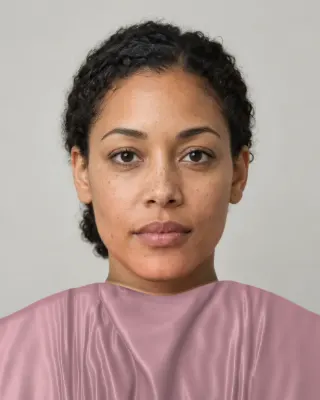
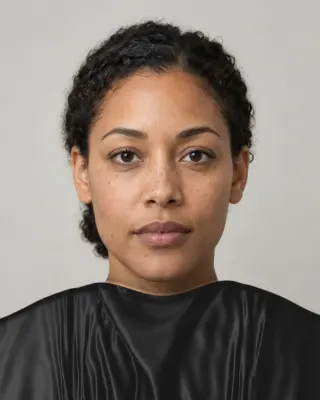
The Full Color Report: $19one time
You in your best and worst colors, about 40 colors with hex codes, makeup, hair and a capsule wardrobe plan.
See a sample reportCommon questions
- What hair color suits a Soft Summer?
- Soft, slightly ashy shades close to your natural depth: ash brown, mushroom brown, light natural brown and dark ash blonde. Very dark, very light and very warm hair all add contrast or color this palette doesn't have.
- Is mushroom brown good for a Soft Summer?
- Yes, it's about the closest match in hair to what the palette does in clothes: a mid brown with a smoky, silvery cast. Bring a photo, because it isn't a standard term on dye charts.
- Do golden highlights work on a Soft Summer?
- Sources disagree. Some say subtle ones add dimension because the season borders autumn, while others rule gold out. A beige or neutral highlight within a level or two of your base is a safer start. If gold is clearly better on you, look at Soft Autumn too.
- Can a Soft Summer be blonde?
- A dark ash blonde, yes, and many had lighter hair as children. Platinum and bright golden blondes add more contrast and color than this season usually carries, so keep any blonde muted and close to your natural level.
- Purple or blue shampoo for a Soft Summer?
- Match it to what you see. Blue cancels orange and copper, which is what brown hair tends to show. Purple cancels yellow, which is what lightened pieces and blonde hair tend to show. If you have both, use each where it's needed.
- Will dyeing my hair change my color season?
- Classic color analysis says no: your season stays, whatever your hair does. Contrast does change, though, so a big jump can make your usual colors look different on you. A camera scan also reads hair, so scan with your natural color showing if you can.

See which colors are yours.
See your colors on your own face, compare seasons side by side, and get your season, your undertone and a starter palette.