Olive undertone: how to tell it from warm or neutral
An olive undertone is a green or grey lean in the skin that the warm and cool labels don't quite capture. Experts disagree about nearly everything else, so here's who says what, and a test that doesn't rely on your veins.
- Measured skin averages, 53 to 60°
- Monk swatches, 49 to 89°
Is olive an undertone at all?
Depends who you ask, and they aren’t quibbling. Each answer leads somewhere different. This is everything we could find that takes a clear position:
| Who | What they say olive is |
|---|---|
| Wikipedia | A skin tone, with “greenish, yellowish, or golden undertones”, roughly Fitzpatrick III to V |
| Brooke Ann, stylist, in IPSY | An overtone, “the surface color we notice first”. She says olive skin doesn’t have olive undertones |
| Amber Chasteen, makeup artist, in IPSY | A muted, grey earthy look “with a green-blue or gray-yellow undertone” |
| Mi Colorometría, color analysis site | “Un subtono, no un tono”: an undertone and not a tone. It adds that olive is a green-grey veil over cool, warm or neutral |
| Dior | A warm subfamily: its Forever foundation lists Warm Olive under its six undertones |
| Our undertone test | A fourth reading, returned when mid-depth skin sits past warm in hue and low in red for its depth |
Notice that two people quoted in one article disagree. We don’t think this gets settled, because undertone has no scientific definition to appeal to. What you can do is ask a sharper question: what do these people see? Almost all of them mention the same two things, a green or grey cast and muted color. That’s what we use. Olive may be an undertone, an overtone or a veil, and you’ll get to the same place either way.
Where olive sits on the color wheel
The figure at the top is the most useful way we know to think about this. Spectrophotometer readings of real skin put every group’s average in a narrow slice of the color wheel between red and yellow. Warm and cool are small moves either side of that. Olive goes further toward yellow-green than warm does, and in our recipe it turns about twice as far as warm does. But it also loses about a quarter of its color, and that loss is what you see as grey.
So olive differs from warm on two counts: more toward green, and less color overall. At tone 6 depth, our olive sits about as far from warm as warm sits from cool, and further still from cool. It really is off to one side of the warm and cool line. These are our illustrations, placed by judgment, and the distances describe those illustrations and nothing more.
Is an olive undertone warm or cool?
Bethany Brenneman told IPSY that “90% [of people with olive skin] tend to have a cool undertone”. It’s the most repeated line on the subject, and it’s one makeup artist’s impression, not a count. IPSY’s piece also says “some olive skin types may have neutral undertones or warm undertones”. Dior, meanwhile, files olive under warm, and Wikipedia’s description of yellowish or golden leans the same way. Mi Colorometría says it can be any of them.
Here is our guess at why they disagree, offered as a guess. Olive skin is yellower in hue than neutral, which reads warm on a wheel. It also carries less color, so next to golden fabric or orange makeup it looks grey and flat, and that behaves like cool skin does under warm colors. An analyst going by behavior says cool. A brand going by hue says warm. Both are describing something real, which is why you need a test based on your own results instead of a rule.
Why does foundation look wrong on an olive undertone?
Brenneman’s description is the one most people recognize: foundations “often look too pink or too yellow, and neutral foundations, while a better match, don’t match perfectly.” Each kind of failure tells you which way to adjust:
- Too pink, like a mask: the hue is wrong. Go yellower.
- Too orange or bright, even in a yellow shade: right hue, too much color. Look for something quieter, or an olive-labeled family.
- Grey or ashy: usually too light or too low in color for your depth. Try one step deeper first.
- Fine in the shop, wrong outside: a light problem, not a shade problem. Check at a window.
Dior’s WO shades are one example of a range that names this family. Our foundation shade finder gives an O code with a depth family when your reading comes out olive. The olive skin page has a practical buying checklist.
Do the vein and metal tests work for olive?
Not well, and the contradictions are easy to show. Here are three readings of the same green vein:
- Chasteen, in IPSY: “If they appear more green than blue, you have an olive skin tone.”
- Skincare.com: greenish veins “suggest warmer yellow or golden undertones”.
- Mi Colorometría: they look green even when the undertone is cool, because the olive tints what’s underneath.
All three can’t be right, and the optics give little support to any of them. Kienle and colleagues showed that vein color depends on how skin scatters and absorbs light, on blood oxygenation, on the size and depth of the vessel and on perception. None of that is an undertone. Use our vein test if you’re curious, knowing it gets little weight.
Metal is less absurd, but it still struggles. Mi Colorometría’s opinion is that polished yellow gold stresses the yellow in olive skin and bright silver stresses the grey, so neither flatters, and it suggests trying matte or antiqued versions. That matches what many people describe. It’s still an opinion. So our gold or silver test reports only a lean.
A test built for olive: color pairs
This works by looking at your face beside color, which is the thing you actually care about. It’s our method, built on how draping has always worked, and nobody has validated it. Use it as a structured way of looking.
- Set up. Bare face, hair back, indirect daylight from a window. Lay out cloth or paper in the colors below, or use a screen at full brightness if you must, knowing that’s weaker.
- Run the temperature pairs. Hold each color under your chin in turn. Look at your skin, not the color: under the eyes, beside the nose and around the mouth.
- olive against cool teal
- salmon against dusty rose
- soft camel against taupe grey
- Run the strength pair. This is the one standard tests leave out: moss against kelly green, similar hue with a big difference in strength. Then terracotta against tomato.
- Read the pattern. Don’t count wins so much as look at what fails, and how.
| What you see | A reasonable reading |
|---|---|
| Muted beats clear every time, and the warm side wins | Warm olive |
| Muted beats clear every time, and the cool side wins | Cool olive |
| Muted beats clear, temperature makes little difference | Neutral olive |
| Clear colors look great and the warm side wins easily | Probably warm, without olive |
| No pattern at all | Possibly neutral. Try again on another day |
The same idea runs live in our undertone test, using some of these pairs, shown beside your photo. Real cloth in real daylight is still better than any screen.
Olive at different depths
Brenneman says olive can range “from fair to deep”, and in numbers it’s the middle where you notice it most. Our olive sits more than twice as far from neutral at tone 6 as it does at tone 2 or tone 9. In practice, that means two groups often go undiagnosed. Fair olive skin gets called sallow, or neutral. Deep olive skin gets called warm, since it’s brown and nobody looks further. Our own camera reading has this limit too: it only calls olive on skin in the middle range of depth, because outside that range there isn’t enough color to tell. If you’re at either end and foundation has always been a struggle, the golden-and-sage check below, by a window, is worth your time.
When you’re done here, the best colors for olive skin turns the result into a wardrobe. Undertone meaning covers the wider vocabulary.
Related guides and tools
Sources
- Olive skin
- How to tell if you have olive skin, according to expert makeup artists
- Piel oliva colorimetría: ¿fría, cálida o neutra?
- Dior Forever foundation
- How to find your skin tone and undertone
- Why do veins appear blue? A new look at an old question. Kienle A et al.
- Measuring human skin colour. Wang M, Xiao K, Wuerger S, Cheung V, Luo MR
- Monk Skin Tone Scale
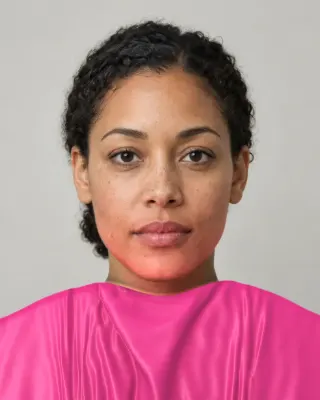
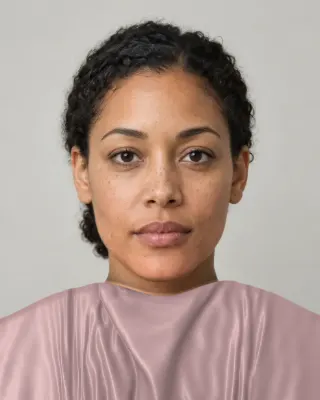
The Full Color Report: $19one time
You in your best and worst colors, about 40 colors with hex codes, makeup, hair and a capsule wardrobe plan.
See a sample reportCommon questions
- What does an olive undertone look like?
- Skin with a slightly green or grey cast and less color than you'd expect, seen most easily in flat daylight. It's subtle. You're more likely to notice it as foundation refusing to match, or as bright warm colors making you look tired.
- How is olive different from a warm undertone?
- Warm skin is yellow or golden and holds its color. Olive goes further toward green and looks more muted. Strong warm colors like marigold tend to look good on warm skin, and they're more likely to look harsh or sallow on olive skin.
- Can you be both olive and cool?
- Many analysts say yes, treating olive as a cast on top of a warm, cool or neutral base. Others disagree. Whichever is right, it's a useful way to work: test for muted against clear, then test for warm against cool.
- Is it true that 90% of olive skin is cool?
- That figure comes from one makeup artist quoted in IPSY, with no data behind it. It may reflect her clients. Dior's range places olive on the warm side, so treat it as one person's impression.
- Do green veins mean I have an olive undertone?
- Not reliably. Sources read green veins as olive, as warm, or as a meaningless effect of olive skin. Vein color mostly reflects skin optics and the vessel itself, so don't lean on it.
- Does an olive undertone change with a tan?
- Depth changes and the cast usually stays. Wikipedia notes that olive skin can pale with limited sun while generally keeping its greenish or yellowish undertones. You might need a deeper shade in summer from the same family.

See which colors are yours.
See your colors on your own face, compare seasons side by side, and get your season, your undertone and a starter palette.