Neutral undertone: what it means and how to be sure
A neutral undertone means warm and cool signs roughly cancel out, at any depth. Plenty of results that look neutral are really a weak tie or a slight lean, so here's how to tell which one you have.
True neutral
Plenty of evidence on both sides, and it still sits level.
A weak tie
Level, but only two light tests on it. This proves very little.
A slight lean
Close to level, and it drops the same way every time.
What is a neutral undertone?
Skin whose lean is too slight to call either way. M·A·C defines it as “an equal balance” of warm and cool, and Dior’s Neutral family is for “balanced pink and yellow tones”. In color terms, it means sitting close to the middle of the narrow hue range where skin lives. It doesn’t mean beige, or medium, or colorless. It occurs at every depth:
You may have searched for “neutral skin tone”. It usually means the same thing, even if tone and undertone are strictly different words.
Is a neutral undertone rare?
Nobody knows, and be wary of anyone quoting a percentage. We found no prevalence figure with data behind it, and there’s a good reason none would mean much. Undertone has no agreed cutoff. Whether neutral is rare or common depends entirely on how wide you draw the middle band. Draw it narrow and almost nobody qualifies. Draw it wide and half the population does. Our own undertone test calls a result neutral when the evidence nets out inside a band around zero, and that band is a choice we made.
A more useful question is which of three situations you’re in, because all three look like neutral from a distance. That’s what the three scales at the top show.
A tie isn’t a result
Here’s where many people go wrong. Standard advice turns confusion into a diagnosis. Skincare.com says that if you “can’t really suss out” your vein color, or see a mix, “you may have neutral undertones”. The result: anyone with a hard-to-read test gets labeled neutral. Brilliant Earth’s jewelry guide has it right, in a line we wish were on every quiz: a tie, it says, “doesn’t necessarily indicate neutral undertones”.
One weak test that doesn’t point anywhere is absence of evidence. Real neutrality is evidence of balance. You need strong tests, run several times, that still come out even. Very fair and very deep skin are at most risk of a false neutral, because both carry so little color that tests come back mushy.
Confirm or reject: the four-round test
This is how to separate the three scales. It’s our method, and it isn’t validated. Bare face, indirect daylight, and honest notes.
- Round one, gentle pairs. Hold each under your chin, and pick the one that leaves your skin clearer: salmon or dusty rose, then soft camel or taupe grey.
- Round two, stress the extremes. This is the round standard tests skip. Try something strongly warm, like mustard, then strongly cool, like fuchsia. Both may look a bit much. The question is whether one is clearly worse.
- Round three, the whites. Pure white against cream, close to the jaw.
- Round four, another day. Repeat rounds one and two in similar light. Then compare your notes.
| What you found | What it probably means | What to do |
|---|---|---|
| Each pair really is close, and both extremes look about equally off, both days | True neutral | Shop from the middle. You have the widest choice |
| Each pair is close, and yet one side wins most rounds or fails less badly | A slight lean | Say neutral-warm or neutral-cool, and shop accordingly |
| You couldn’t see much difference in anything, either day | A weak tie | Try stronger colors, better light or a second person’s eyes |
| One extreme looks fine and the other looks awful | Not neutral | See warm or cool |
| Both warm and cool look off, and muted beats bright | Possibly olive | See olive undertone |
The undertone test shows warm and cool pairs like round one beside your photo, and tells you if it was a close call.
Which foundation should a neutral buy?
Neutral is often sold as the easy option, and it gets you close faster. But close can be a trap too, because a shade can look acceptable without looking right. Try this:
- Find your depth first. A neutral undertone in the wrong depth still looks wrong, and it looks wrong sooner than a slightly off lean does. The foundation shade finder gives you a family to begin with.
- Look for N in the shade code, at brands that use letters. M·A·C has an N line, and says neutral is “an equal balance of both”. Its page doesn’t define NC or NW, and elsewhere it labels warm and cool in reverse of most brands, so test before you trust.
- Swatch three stripes along your jaw in daylight: the neutral, and one step warmer and cooler at the same depth. If the neutral disappears best, great. If one neighbor beats it, you’ve just learned your lean.
- Expect some shifting between products. As M·A·C puts it, “your shade may vary across foundations due to formula variations.” A neutral in one line can read slightly warm in another.
Which colors and metals suit a neutral undertone?
Being neutral opens more doors, but temperature stops deciding much, so other things have to do the choosing. Depth and strength matter more for you than for most. Do you look better in soft or clear? Light or deep? That’s what will separate your good colors from your bad ones, and it’s why testing colors on your own face pays off.
There’s also a family of colors that barely take sides. We searched our twelve palettes for colors that measure close to zero on our warmth axis while still having real color, as opposed to being grey. Mauves and forest greens dominate, since they sit off to the side of the warm to cool line:
If you’re looking for a season to explore, try the palettes nearest the middle on temperature. By average warmth across 40 colors, ours are Bright Winter and Deep Winter, both almost perfectly balanced. These numbers describe the palettes we built, not people, and neutral skin doesn’t mean any one season.
Whites are easy: try soft white first and move toward either bright or cream. Metals are the fun part. Mixing is on the table, so try gold and silver together, or rose gold, which is itself a mix. If you want a test, the gold or silver test will often come back close for you, and that’s a fair result here. For lips, rose and antique rose are good places to compare, and which you prefer tells you whether there’s a lean after all.
For the wider vocabulary, read what undertone means. For a comparison of the tests, see how to find your undertone.
Related guides and tools
Sources
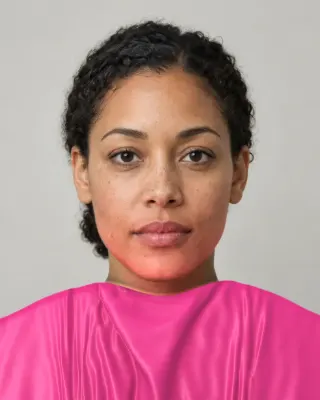
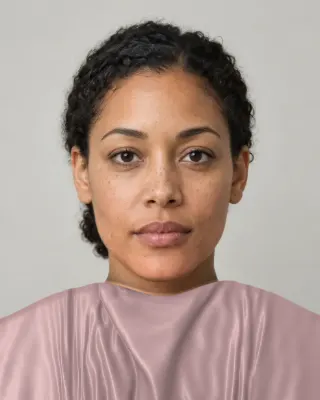
The Full Color Report: $19one time
You in your best and worst colors, about 40 colors with hex codes, makeup, hair and a capsule wardrobe plan.
See a sample reportCommon questions
- What does a neutral undertone look like?
- Neither clearly pink nor clearly golden, at whatever depth you are. Most colors look acceptable on you, and white and cream look about equally fine. It's easier to recognize by what doesn't happen: nothing strongly warm or cool looks far worse than its opposite.
- How common is a neutral undertone?
- We couldn't find a percentage with any data behind it. Since undertone has no standard cutoff, any figure depends on how wide someone draws the neutral band.
- Is neutral the same as olive?
- No, though they get confused. Both can look bad in strong warm and strong cool. Olive adds a muted green-grey cast and foundation rarely matches. True neutral looks balanced, and neutral foundation usually works.
- Can you be neutral with a warm side?
- Yes, and it may be the most common honest answer. People who are only slightly warm or cool often say neutral-warm or neutral-cool. Go by whichever side wins more of your rounds, and use that to break ties in shopping.
- Should a neutral undertone wear gold or silver?
- Both, which is the fun of it. Choose by the finish and how it goes with your clothes and hair. Rose gold, mixed metals and two-tone pieces all make sense here.
- Can dark skin have a neutral undertone?
- Yes, at any depth. But be careful about false neutrals on very deep skin, where lean is harder to see and quick tests like veins don't help. Use same-strength color pairs before settling on it.

See which colors are yours.
See your colors on your own face, compare seasons side by side, and get your season, your undertone and a starter palette.